Most people find out their hot water system has reached the end of its life on a Monday morning, in the shower. It does not usually fail without warning though. It fails after about a year of small signs nobody connected.

There is no single number, because a tank and a continuous flow unit are different machines doing the same job. These are the ranges worth planning around.
A tank with an element in it. The tank is the part that fails, usually by rusting through from the inside, and once it does there is nothing to repair.
Same tank problem, different heat source. The burner and thermocouple can be replaced several times over the life of the unit, the cylinder cannot.
No tank to rust, which is most of why these last longer. Parts are replaceable and worth replacing well into the unit’s life.
A tank plus a compressor, so there are two things that can end it. The compressor is the expensive half.
Every unit has a metal or foil plate on the side or front with the brand, model and serial number. On most Australian systems the manufacture date is encoded in the serial, often as the year and week. Take a photo of it. It is the single most useful thing you can hand a plumber over the phone.
Common on units in a cupboard or behind a fence where the sun has got to the label. The install sticker is the next best thing, and failing that, the age of the house or the last renovation usually brackets it closely enough to be useful.
None of these are proof on their own. Two or three together, on a unit past ten years old, usually are.
Sediment builds up in the bottom of a tank and takes up volume that used to be water. A tank that gave you two showers and now gives you one and a half has not shrunk, it has silted up.
Brown or orange water from the hot tap only, not the cold, points at the inside of the tank. That is corrosion, and corrosion does not reverse.
Sediment trapping water underneath it against the heating surface. It is a noise worth taking seriously because it also means the unit is working harder than it should.
A relief valve that drips occasionally is normal. A puddle, a rust stain or a damp patch that keeps coming back is a tank that has started to let go.
A pilot that will not stay lit, an element that keeps going, an error code you have learned by heart. One repair is maintenance. The third one in a year is a replacement you are paying for in instalments.
Age alone is not a fault, but it changes the maths on every other sign. The same drip means something different on a four year old unit than a fourteen year old one.
Tanks do not usually die of old age. They die of something specific, and two of the three are preventable.
Storage tanks contain a sacrificial anode, a rod that corrodes so the tank does not. It is consumable. Once it is gone the tank starts corroding instead, and replacing an anode is far cheaper than replacing a cylinder. Worth checking around the five year mark on a tank you want to keep.
The temperature and pressure relief valve on a storage system is designed to be operated every six months, by lifting the lever and letting it discharge briefly. It clears debris off the seat. Left alone for years it can seize, and a seized relief valve is a safety problem rather than an inconvenience.
Water chemistry varies more than people expect, and it changes how fast both the anode and the tank go. It is also why the same model lasts eleven years at one house and seven at another a few streets away.
There is no clean rule, but there is a reasonable way to think about it.
A newer unit with a single identifiable fault is normally worth fixing. The parts that fail at this age are the parts designed to be replaced.
At this point you are spending money on a machine that owes you nothing. A repair buys time rather than life, and you will likely be back.
An element or a thermostat is a different conversation to a leaking cylinder. One is a part, the other is the unit. Which one it is should be established before anyone quotes you.
Usually, yes. Find the compliance plate on the side or front of the unit and photograph the serial number. On most Australian brands the manufacture date is encoded in it. If the plate has faded, the install sticker or the age of the bathroom will normally get you close enough to know which decade you are in.
Not necessarily, and it is worth not assuming the worst. A pilot light that has gone out, a tripped circuit, a failed thermostat or a single element can all produce exactly the same symptom as a failed tank. Those are repairs. What matters is which one it is, and that is a diagnosis rather than a guess. Worth knowing which plumbing problems actually need someone that night before you pay after-hours rates.
On a tank under about eight years old that is otherwise sound, often yes, because it is a far smaller job than replacing the cylinder. On a tank already past twelve years, usually not, because you are protecting something that is near the end anyway.
It depends on how much hot water the house uses, whether gas is already connected and where the unit can physically go. Continuous flow suits households that use hot water in bursts and never want to run out. Heat pumps run on electricity and suit homes moving off gas, but they need airflow and space around them. We go through the options for your place rather than fitting whatever is on the truck.
A small discharge now and then is normal and is the valve doing its job. Continuous dripping, a rising puddle, or a valve that has never been eased in years is worth having looked at. Relief valves are a safety device and are the one part of a hot water system not to leave alone.
We cover Frenchs Forest, Forestville, Killarney Heights, Belrose, Davidson, Beacon Hill, Cromer, Narraweena, Brookvale, Dee Why and the surrounding beaches, and we respond to hot water failures the same day where we can. Call and tell us what is happening and we will tell you honestly when we can be there.
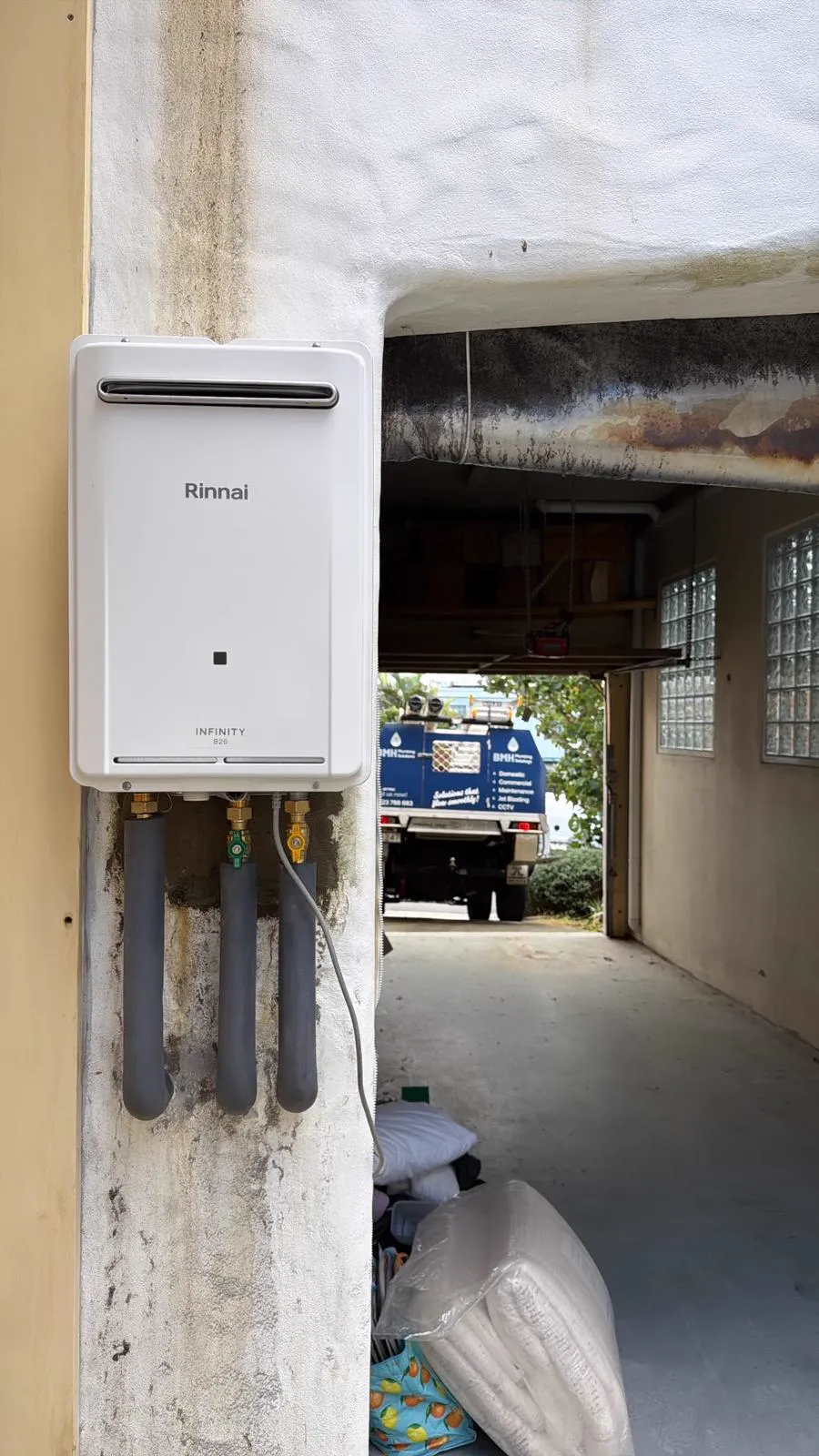
We will work out whether it is a repair or a replacement, and tell you which before anything starts. More on what we cover on our hot water and gas page.
Licensed & insured · NSW Lic. 322273C · Available 24/7.